
New Year, More You
Dec 08, 2025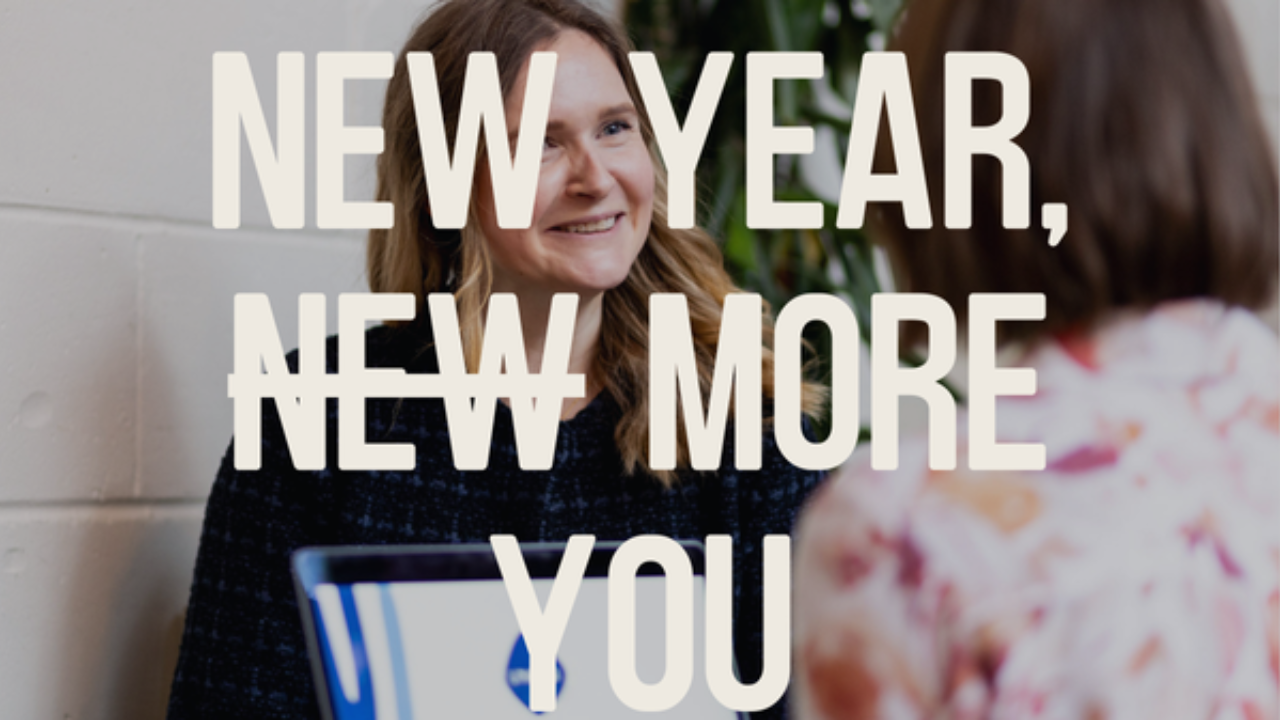
By Charlette Pomme
-Why ‘New Year, new you’ doesn’t actually work.
Search why New Year’s resolutions don’t work and you’ll find some good answers.
You’ll find some advice on how to get better at making clear goals, how to change your gratification bias, how to form habits. You’ll find helpful tips that are even more work and effort to understand and implement before you can actually get started on your New Year’s resolutions.
But we like to simplify things at Unaggi.
Yes, you can go through each of those points and work out how to get better at each one, but the reason they didn’t all happen in the first place is because you made a New Year’s plan that is not right for you - either:
- the outcome,
- the path to the outcome,
- or the timing
wasn’t right.
Your subconscious knew that, but your conscious mind used the abandoned goal as confirmation that you are, in fact, a flawed human being and that you do still need to change.
Why does ‘failing’ at a New Year’s resolution make us feel like we’re flawed and confirm that we need to change (when we don’t)?
Because of something called your reticular activating system (RAS).
The RAS is a complex circuit within the brainstem that keeps your brain responsive to the world. Its main job is to look for danger to keep you safe. It loves patterns. It’s why, if you start thinking about buying a yellow car, you start seeing yellow cars everywhere, and why you can hear your name in a very busy room.
If you have learnt or decided that you are flawed in some way and you need to change, your RAS will help you to identify all of the reasons why this is true - even if you are trying hard to make your New Year’s resolution a success.
So what do we do instead that makes this whole New Year’s resolution thing much easier?
First and foremost, please trust us when we tell you that you don’t need to change. We don’t want a ‘new’ version of you. We want more of you. To be more you and feel really good about it (and achieve those goals), we use your RAS to bring you success by:
- Exploring the ambivalence
- Getting very clear on how you want to feel
Ambivalence
This is when you kinda want to do something and you also kinda don’t.
We don’t know why we feel ambivalence unless we explore it. When we do, we find the ‘key’ that makes everything easier.
When you explore your ambivalence towards something, you gain a deeper understanding of your personal motivations, fears, and aspirations. This heightened awareness is essential for identifying areas that need attention and for setting meaningful goals.
When we do this, we often realise why New Year’s resolutions (and goals in general) haven’t worked in the past.
These ‘keys’ to success - hidden behind ambivalence - are often a bit off-centre. They can seem a bit random or not logical, but they work!
For example, one of my clients stopped enjoying her work; she wanted her work to feel easy and inspiring again. When we explored her ambivalence behind ‘kinda wanting to work and also kinda not’, we uncovered that she needed more time being playful outside of work. That became her goal (if it was January, she might have called it her New Year’s resolution). Previously, her goal was to spend more time at work and make her office environment more attractive. She wasn’t hiring the interior designer or sourcing furniture, even though it was quite easy for her to do, but once she arranged some fun things outside of work, she started to feel creatively inspired at work again and realised she liked her office as it was and didn’t want to change anything.
What she did was turn her RAS from focusing on ‘not feeling inspired and fulfilled at work’ and proving that was true (a goal), to focusing on bringing joy into her personal experiences and noticing how fun and play show up in her everyday life (a meaningful goal). Her RAS was looking out for all the cues that proved that life inside and outside of work can be fun, creative, and inspiring.
You could argue this was an illogical key - focusing on time outside of work to improve her experience at work - but it was the personal key she needed.
Uncovering her ‘key’ made everything feel easy and enjoyable, and she didn’t have to work on understanding clear goals, how to change her gratification bias, or how to form habits. These all happened naturally and effortlessly because her new goal was meaningful.
We call it alignment. It’s how you know you’re doing the right thing and you know you’re going to get the outcome you want. You don’t need to force it. Even if the process is going to require hard work, you will want to do it, enjoy doing it, and feel inspired to do it.
More You, not a New You.
It isn’t inspiring to be a different person. Our brains find that very difficult to process.
Wanting to be like someone else or be someone else is an external driver. This either withers over time and you think you’re undisciplined or lazy for not achieving this ‘new you’, or you keep going and never get there because your RAS is still focused on why you’re flawed and highlights everything it finds to prove this belief is true.
The thing that makes you confident and comfortable in your own skin - that makes achievement and success easy - is understanding yourself. Understanding an ambivalence you have is just one way you can do this. It highlights what is important to you, not anyone else.
Remember, it’s your life you’re changing, not anyone else’s. So the question is: How do you want to feel? Not: Who do you want to be?
When you’re clear on how you want to feel, then we can get clear on what makes you feel that way.
Life is a series of decisions. Every choice we make adds up to create our life experience - from What shall I eat today? to Where shall I live and who shall I spend time with? Your RAS will work in the background to help you make all the decisions that add up to a life that gives you the feelings you want to feel, if you get clear on what they are and you give that puzzle to your RAS.
THAT is what it’s there for! And that’s why any goal can be easy - if you use your brain to your advantage.
Coaching questions you can use to support your success:
- Identify how you want to feel - How will you feel when you’ve made the change you want to see? What will you experience around you in your life? How will you move through the world, walk down the street? How does thinking about this feel in your body? What do you notice in your body? (Tip: It usually feels light and energetic in the chest. What else do you feel?)
- What else makes you feel like this? When have you previously felt like this?
- Identify what you kinda want to do, but also kinda don’t (ambivalence).
- What feelings come up when you think about this ambivalence?
- How is this different to the feeling of success?
- The ambivalence is here for a reason. How has this struggle served you in the past? (Tip: it will have kept you safe in some way - e.g., from risking embarrassment or failure.) And why might this similar ambivalent feeling be trying to support you now?
- Do you need this ambivalence to support you now?
- As we explore this topic, what’s becoming clear for you?
- What would you like to change?
In summary
Not achieving a goal as it was originally set out, and experiencing ambivalence, should not be viewed as a sign of weakness or indecision. Instead, it is a huge opportunity to examine your inner conflicts, clarify what truly matters, and chart a speedy and more intentional path forward. People who effectively harness the power of ambivalence and their RAS create a transformative place for introspection, guiding themselves towards meaningful change and sustained success.
You don’t need to change to feel successful - you need to focus on how you want to feel, how you’ll feel when you’re successful. Your RAS will do the rest.
If you want help navigating a resolution, a goal, or your confidence and path to success - you can book your free discovery call with one of our founders and we’ll help you get started. Simply book your EQ tuning session below (that’s your free discovery call).
Ready to Tune Your EI?
Let's find out how you can tap into your subconscious, primal drivers to make the shifts you need to get you from where you are now to where you want to be.
Or, join our mailing list!
And receive Unaggi Insights straight to your mailbox
We know what makes us feel good- and that is not SPAM. We will never sell your information, for any reason because we're here to make you feel good, too.